- Home
- Running Motivation and Mental Strength
- Affirmations for Running Motivation
Affirmations
for running motivation that mean something to you
By Andrew Greenhalgh | October 2026
Affirmations for running motivation are encouraging statements you listen to or repeat to strengthen the outlook you want to bring to your running.
Whether you’re rediscovering your enjoyment, preparing for a race, or working toward a demanding goal, choose words that matter to you and reflect what you hope to build. On this page, you can explore the practice through our experience, research, and free recordings—and decide whether you’d like to try it.
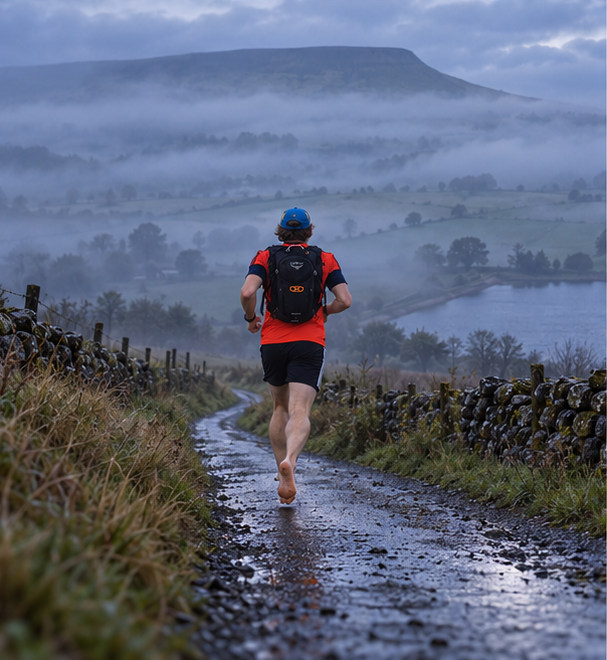
I began using affirmations for running motivation around 2007–08 and have returned to them at different stages of my running. They accompanied my training for my first sub-50-minute 10k at Morecambe, parkrun goals, the Blackpool half marathon and my two middle marathons. I also used them to encourage my commitment to barefoot running (easier said than done). What stood out was how I felt about training:
I began to look forward to challenging sessions, especially speed work, and found more enjoyment in working towards my goals.
Whether you’re finding your feet or chasing a new goal, here you’ll find:
- A personal account of how affirmations became part of my training and changed how I felt about running.
- The research behind the idea, including what it can—and cannot—tell us.
- Help with selecting affirmations that suit your goals, from enjoying regular runs to feeling more confident about a race.
- Build your own free listening session: choose up to four affirmations spoken by me or Julie, with optional soft stream sounds. Set it to last 5, 10 or 15 minutes, then listen on the page or download the MP3 to keep.
- Practical ways to get started: fit listening around your training and see whether it helps.
All recordings and sessions are free to use and download.
What
are running affirmations?
An affirmation is a short statement you repeat or listen to regularly to encourage the mindset you want to develop. For running, that might mean enjoying your training more, staying patient as you progress, or feeling more confident you can take on a demanding challenge, such as a marathon or working toward a faster time. You can read the words, say them aloud or listen to a recording.
When choosing affirmations for running motivation, I usually picked four and listened to them on a loop, with five-second pauses between each. One combination included “You enjoy taking on new challenges,” “Your muscles are relaxed and responsive,” “You are focused on running targets” and “A warm, relaxing current is flowing through your body.” I chose them to build confidence in my body, stay focused on my goals and enjoy the challenges ahead.
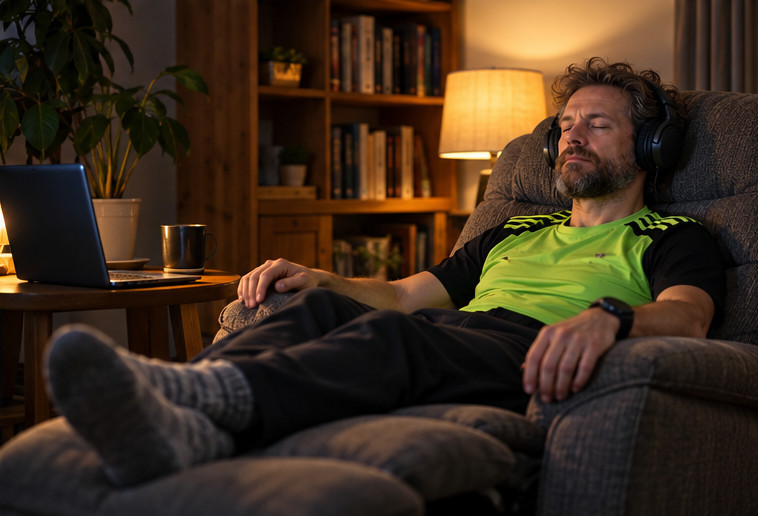
For several weeks, I listened regularly through headphones, relaxing with my feet up in a quiet room. I believe repetition helped the messages take root in my unconscious mind. Sometimes a familiar phrase came to mind during a hard run and lifted my confidence. More often, I noticed a better mood, greater energy and more enjoyment, as though the messages were working in the background.
Running Tips HQ: There’s some overlap here with self-talk, another useful mental training tool. You might use words such as “start steady” or “you can do this” just before or during a run. Researchers sometimes also describe recorded positive statements as self-talk. Here, I focus on my own approach: listening regularly when I'm relaxed and away from training.
Choosing affirmations for running motivation is personal. Start with words that connect with your own goals and the qualities you want to develop. You don’t have to feel convinced by every phrase in our collection—choose the ones you’re comfortable exploring.
Why
I believe the sessions helped me
Before I used these sessions, hard running could become a running argument with myself. I wanted faster times, but I didn't always enjoy the intervals and tempo work needed to get there. As the effort rose, negative thoughts often followed, and sometimes I gave up on the session and beat myself up about it.
During the 18-week programs for my second and third marathons, I used affirmations for running motivation in 30-minute sessions combining four chosen phrases with brainwave entrainment (BWE). I prepared the sessions beforehand using the software instructions and listened from week one, usually four or five evenings a week, often after a run. In theory, BWE would help me enter a relaxed, receptive state for the affirmations—a more involved version of the listening practice described here.
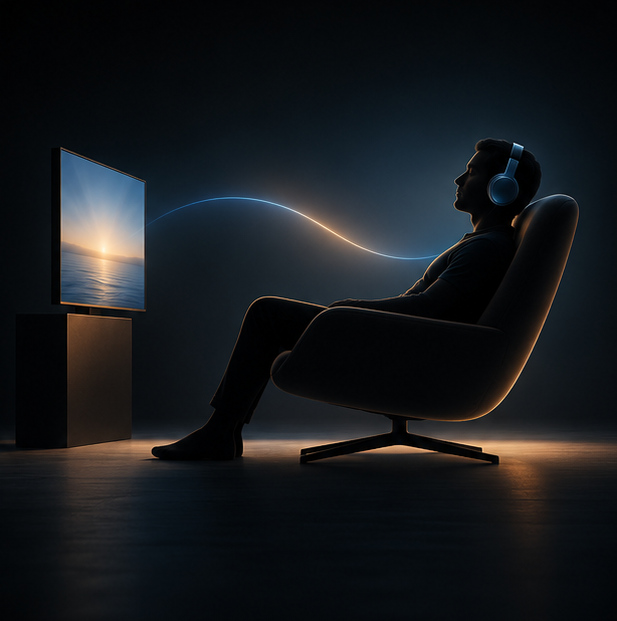
The immediate effect I noticed was a very relaxed, clear-headed state. I had experience with zazen meditation, and the stillness felt comparable, though the sound-and-light sessions were distinctive. To me, the routine seemed like a form of self-hypnosis: a quiet, deliberate period in which I repeatedly heard the same messages.
The change during running developed over weeks and months. When an interval became uncomfortable, I might ‘hear’ the familiar recording: “You are confident and optimistic about your performance.” Occasionally I said the words aloud. I still felt the effort, but I increasingly felt willing to work with it. I had more of that bit-between-the-teeth attitude, and more enjoyment, than I had previously found in those sessions.
In my training diary for the Blackpool half marathon, I noted that the combined sessions seemed to help me complete intervals I might otherwise have abandoned. I was also getting fitter through regular training, so I can’t separate their contribution from the training itself. But my belief that BWE and affirmations helped began then, and has stayed with me.
I believe the combined practice strengthened my confidence, helped me embrace demanding training and, in turn, contributed to my performance. I feel repetition allowed the messages to influence my thinking without conscious effort. I can’t establish exactly how this happened or separate the effects of affirmations, relaxation, BWE, expectations and training. Even so, the changes I noticed were meaningful, and I believe the experience is worth sharing. Worth trying.
That enjoyment has stayed with me even during long periods without the sessions. It’s one reason I value affirmations for running motivation: I believe they helped nurture a lasting love of running, which matters to me as much as any race result.
Julie’s
experience with consistency
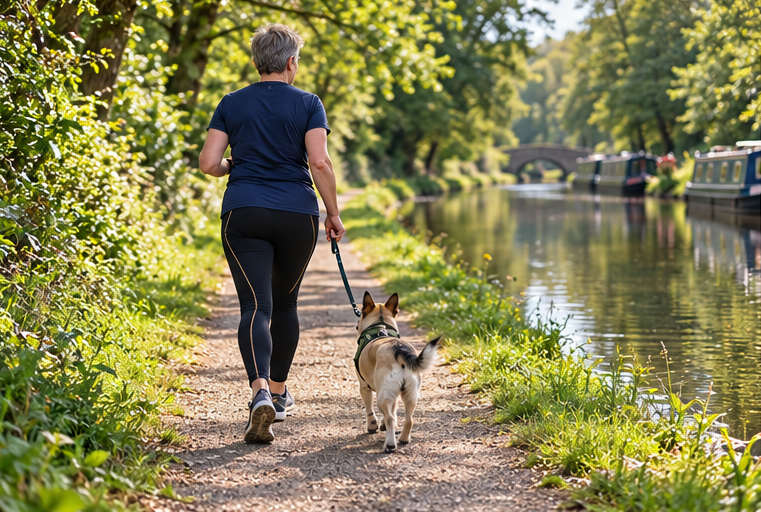
Julie wanted to run for fitness and to help manage her weight, but her early attempts often lasted only a couple of weeks before she lost momentum. After we introduced combined NP3 and affirmation sessions, she began running consistently and training for 5k and 4-mile distances. We both believe the sessions helped. Her hip later limited how much she could run; these days, she mainly enjoys run-walk outings with Riley.
SAFETY NOTE: BWE products vary, so follow their full safety instructions. If you have epilepsy, a seizure history or photosensitivity, avoid flashing screens and light goggles and consult your specialist before considering BWE. Closing your eyes or disabling flashes does not remove all risks. If pregnant, using a pacemaker or taking medication, seek medical advice first. Never use BWE while driving, operating machinery or under the influence of alcohol or other drugs. These precautions concern BWE; our recordings of affirmations for running motivation, with optional stream sounds, contain no flashing lights or stimulation pulses. [6, 8]
When the words
followed me beyond running
Encouraging evidence suggests that listening to motivational messages before exercise helps, although the studies do not directly test the routine I used over weeks of training. Research terminology varies: recorded positive statements sometimes appear under “self-talk,” so what participants actually did matters more than the label.
In a study of 90 high-school distance runners, participants were randomly assigned to listen through headphones to personalised motivational and running-technique statements, music or silence before a 1.6 km run. Both the statement and music groups improved significantly from their earlier run; the silence group did not. This is relevant to pre-run listening, but it combined encouragement with technique advice and did not test repeated sessions over a training program. [1]
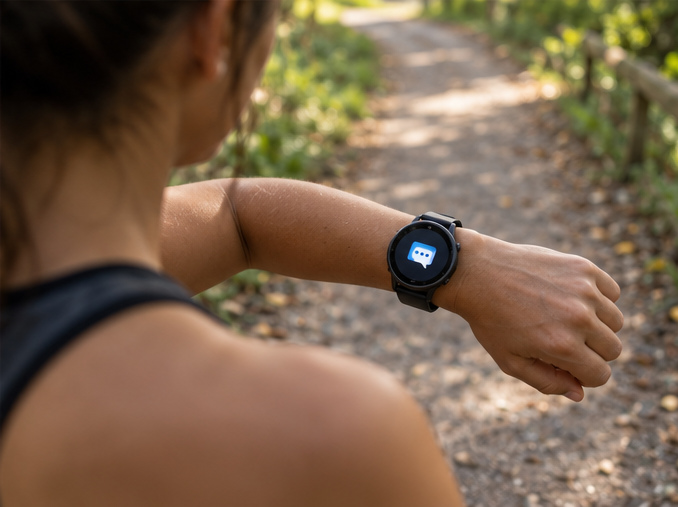
Other findings deliver useful context. A study of athletes listening to positive or negative self-statements found better performance on two of three physical tasks with positive statements. However, head movements during listening influenced the results. Because the comparison was with negative statements, it does not establish an advantage over ordinary preparation. A small, exploratory master’s study of 17 runners using watch-delivered affirmations also reported experiences of greater calm and motivation. Those messages appeared during runs, and the study did not establish faster race times. [2, 4]
BWE research is mixed. A small trial in 19 kickboxers found that binaural beats added to preferred music improved striking performance when compared with music alone and a control condition. In contrast, a pilot study in 11 cyclists and triathletes found no added cycling-performance benefit from isochronic beats. These tested different sounds and sporting tasks; neither examined whether BWE strengthens the effects of recorded affirmations. [5, 9]
Choose affirmations for running motivation that feel encouraging and relevant to what you want to achieve. Research outside sport suggests that strongly positive statements can sometimes feel discouraging when they clash with how someone sees themselves, particularly among people with low self-esteem. This doesn’t tell us how runners will respond, but it suggests choosing words you can connect with. For example, “You enjoy taking on new challenges” might appeal more than “You always finish strong.” Give yourself room to discover which phrases suit you. [3]
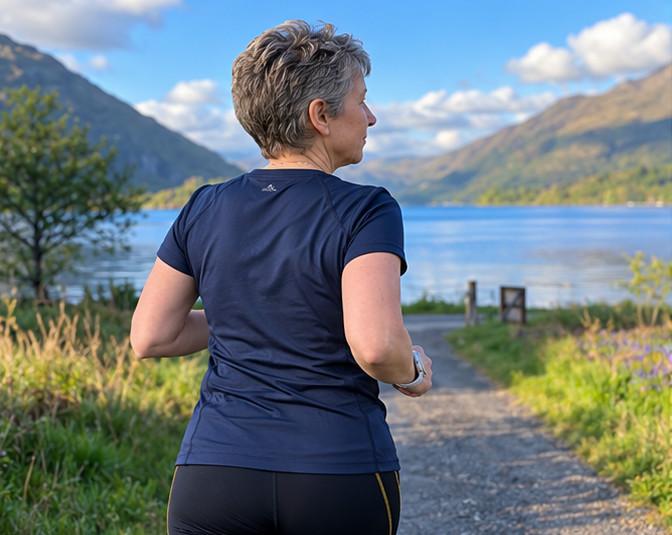
I believe affirmations helped Julie and me, especially with our confidence, enjoyment, and approach to training. The research gives us reasons to explore the practice, while leaving questions about repeated relaxed listening and BWE's contribution. If it appeals to you, the free recordings offer a simple way to try it: listen without demanding a particular result, and see what you notice over time.
Choosing
affirmations for running motivation
Start with the running you want to support. Are you looking for confidence before an event, more enjoyment in ordinary outings, or patience while building fitness? Choose a small group of relevant phrases. I used four, because that gave me enough variety while keeping the messages familiar. Four was my practical choice, not a scientifically established optimum.
Four affirmations I
used for performance
• “You are confident and optimistic about your performance.”
• “You are focused on running targets.”
• “Race day is your day to shine.”
• “Your muscles are relaxed and responsive.”
The last phrase helped me picture myself as capable and coordinated—a well-oiled machine. I used it as encouragement, not as evidence that the words physically changed my muscles. The race-day phrase expressed anticipation, not an obligation to run a personal best.
Other original
affirmations you could explore
• For enjoyment: “You enjoy relaxed jogging.”
• For a new goal: “You enjoy taking on new challenges.”
• For a familiar challenge: “You enjoy hill running.”
• For attention to your needs: “You listen and pay attention to your body.”
These are examples from the original collection. Choose them because they fit what you want to practise, not because every phrase has been individually tested. If “You enjoy hill running” feels too far from your experience, try “You are learning to approach hills calmly.” That revised wording is a suggestion for your own recording.
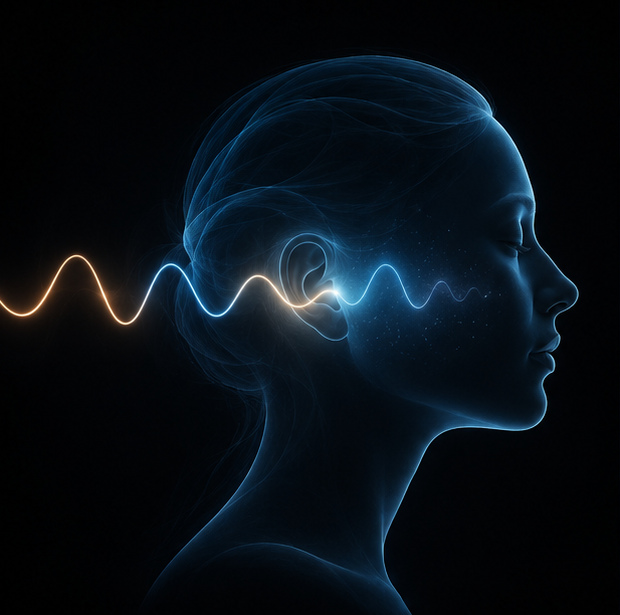
Other adaptable examples are “You can begin at your own pace,” “You make room for running in your week,” and “You give yourself time to build fitness.” These are new suggestions, rather than promises about the contents of the original audio collection.
I found that hearing “you” worked better for me than “I.” I listened to Julie’s voice or the prerecorded voices supplied with NP2 and NP3, so the words felt like encouragement directed at me. Over time, those familiar phrases sometimes returned during demanding runs, bringing that sense of encouragement with them. I made this my preferred wording for running affirmations.
How
I listened and how you could begin
Almost all my affirmation practice involved listening through headphones while relaxed. Occasionally, I spoke to myself in the mirror before going out, but that was only a small part. For me, the regular listening routine was the foundation.
My original NP3 guide used a relaxation induction lasting about four and a half minutes, followed by four recorded affirmations repeating from roughly minute five to minute fifteen, with five-second gaps. The whole example session lasted 27 minutes. In everyday recollection, I describe my sessions as about half an hour; the affirmations didn't have to play throughout.
You can explore affirmations for running motivation more simply, using a recording of spoken words without flashing lights or stimulation tracks. That is a suggested starting approach; my own experience was overwhelmingly with the combined method.
1. Choose two to four phrases that relate to something you want to develop.
2. Settle somewhere comfortable and listen at a comfortable volume for a few minutes.
3. Leave enough space between phrases to hear them without rushing.
4. Return to the same selection regularly, changing wording that feels unhelpful.
5. Notice what, if anything, carries into your running and everyday choices.
You don't have to feel a dramatic effect, concentrate fiercely, or force yourself to believe every word. Give the routine time to feel familiar before judging it, and stop or change it if it leaves you uncomfortable. My changes unfolded over weeks and months; that is my experience, not a required timetable.
Use affirmations alongside a training program that supports your goals. My preparation for faster times included intervals, tempo sessions and longer runs, balanced with recovery. Explore our running training plans to find a starting point that suits you, and let confidence progress alongside sensible pacing, rest and an openness to adapt when your body needs it.

Where
brainwave entrainment fitted into my routine
Brainwave entrainment (BWE) uses rhythmic sounds and sometimes flashing light on a PC monitor to modulate brain activity. I combined it with running affirmations to help me feel relaxed and receptive to the messages.
If you’re curious, Ganzflicker FX is an open-source project combining sound and visual stimulation. It requires technical setup and produces rapid flashing lights; its documentation warns against use by people with photosensitive epilepsy or sensitivity to flashing visuals. GitHub: Please read our safety note before considering BWE.
BWE is optional. Our free affirmation sessions below use spoken recordings with optional soft stream sounds, without sound pulses or flashing lights.
SAFETY NOTE: BWE products vary, so follow their full safety instructions. If you have epilepsy, a seizure history or photosensitivity, avoid flashing screens and light goggles and consult your specialist before considering BWE. Closing your eyes or disabling flashes does not remove all risks. If pregnant, using a pacemaker or taking medication, seek medical advice first. Never use BWE while driving, operating machinery or under the influence of alcohol or other drugs. These precautions concern BWE; our recordings of affirmations for running motivation, with optional stream sounds, contain no flashing lights or stimulation pulses. [6, 8]
Listen to Andrew’s and Julie’s affirmations
Julie and I each recorded the same 36 affirmations for running motivation. Everything in the player below is free to use and download. Listen to both voices, choose the phrases that appeal to you and create a session to support your running goals.
Start by listening to the samples, then choose your preferred voice and up to four affirmations. Select a session length of 5, 10 or 15 minutes, with optional soft stream sounds in the background. You can adjust the voice and stream volumes separately.
Press Play session to listen on this page. To keep your selection, press Create MP3, then Save MP3. Your chosen affirmations repeat throughout the recording, with five-second pauses between phrases and the stream continuing underneath if selected.
The recordings contain phrases about healing, strength and stamina, confidence, and enjoyment. I used them to reinforce what I wanted to work towards; they describe intentions and beliefs rather than guaranteed physical effects. Choose the phrases that feel useful to you, and remember that encouraging words work alongside training, recovery and attention to your body.
Make your own affirmation session
Choose up to four recordings, select a voice and add gentle flowing water if you like. There are five-second pauses between affirmations. Listen here or create one MP3 to keep.
Try the same phrase in each voice: “You are confident and optimistic about your performance.”
Choose your affirmations · 0 of 4 selected
These are our original recorded phrases, offered as encouragement. Statements about physical changes are aspirations, not medical or performance guarantees.
Choose up to four affirmations to begin.
On a phone, the file may open in a player. Use its share or download option to save it. Changing your choices clears this version so you can create a fresh one.
Keep this page open while creating the MP3. The file is made on your device. Spoken affirmations and optional nature sounds only; no BWE or flashing visuals. Listen somewhere comfortable, never while driving.
Stream recording: BurghRecords · CC0. MP3 encoding: lamejs (LGPL).
Make the practice useful to you
Find a quiet space where you won’t be disturbed, put on your headphones at a comfortable volume and settle into a comfortable chair. Make listening a regular part of your training routine, aiming for 5–7 days a week, including rest days. If you’re following an 8–12-week plan, try listening throughout it so the phrases become familiar. Treat it as a personal experiment: relax, listen and see what you notice over time, without expecting a particular result. If you find it worthwhile, keep going between training plans, too.
This is a suggested routine, not a proven prescription. Keep a few notes in your running journal and see what develops: more confidence, less reluctance to train, greater enjoyment—or perhaps no noticeable change. Write it down.
Choose your four affirmations around your goal and what you find difficult along the way. If you’re aiming for a faster time, “You are confident and optimistic about your performance” and “You are focused on running targets” could work. If getting out regularly is your challenge, try “You enjoy relaxed jogging” alongside “Running is your regular exercise.”
Your choices don’t all have to serve the same purpose. Alongside performance affirmations, I included “A warm relaxing current is flowing through your body.” I associated those words with healing and hoped they might support my efforts to stay injury-free. I have no way of knowing whether they helped, but they felt meaningful to me. Sensible training, recovery and responding to pain still mattered.
Use your running journal to track your chosen phrases, listening routine and any changes you notice over time. Note what else is happening in your training and daily life, too—this will help you look back with perspective, whether the sessions seem useful or make little difference.

Try affirmations for running motivation with an open mind. Some things work for some runners and do little for others; this is your chance to see whether they fit into your running. A faster time might be your goal, but greater enjoyment or a little more confidence is worth having too.
I hope these recordings bring something useful to your running, as they did to mine. If you give them a try, please share your experience through our Contact Us page—whether you notice a change or not. We may include some comments on our feedback page, but won’t publish your name or identifying details.
For more ways to build confidence and enjoy your training, explore Running Motivation and Mental Strength.
See you out there,
Andrew
Research and sources
- Miller and Donohue (2003). The Development and Controlled Evaluation of Athletic Mental Preparation Strategies in High School Distance Runners. Journal of Applied Sport Psychology.
- Horcajo et al. (2019). The Effects of Overt Head Movements on Physical Performance After Positive Versus Negative Self-Talk. Journal of Sport and Exercise Psychology.
- Wood, Perunovic and Lee (2009). Positive Self-Statements: Power for Some, Peril for Others. Psychological Science.
- McGranahan (2025). Affirm on the Run: Wearable Technology as a Tool to Improve Mentality in Endurance Athletes. Virginia Tech master’s thesis.
- Jebabli et al. (2025). Beta Frequency Binaural Beats Combined With Preferred Music Enhance Combat Performance and Recovery Responses in Amateur Kickboxers. Frontiers in Psychology.
- Transparent Ltd. (2003–2005). Neuro-Programmer 2 Help. Manufacturer’s manual covering session methods and safety warnings; supplied PDF.
- Ingendoh, Posny and Heine (2023). Binaural Beats to Entrain the Brain? Systematic review of brainwave entrainment research. PLOS ONE.
- Epilepsy Action. Photosensitive Epilepsy. Guidance on visual triggers and seizure risk.
- Music Augmented With Isochronic Auditory Beats or Vibrotactile Stimulation Does Not Affect Subsequent Ergometer Cycling Performance: A Pilot Study (2021).
Personal accounts draw on my training diary, saved session instructions, recordings and recollections.
To return from Affirmations for Running Motivation back to the Home Page click here >>>
Recent Articles


-
Affirmations for Running Motivation: Words to Practise
Oct 18, 26 05:18 PM
 Explore affirmations for running motivation through Andrew and Julie’s experience, practical examples and audio, with an honest look at the evidence.
 -
Running Motivation and Mental Strength: Find Your Focus
Oct 16, 26 07:28 AM
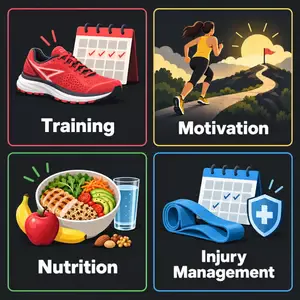 Build running motivation and mental strength with practical habits, goals, self-talk and ways to handle setbacks, informed by research and running experience.
 -
Running for Beginners: Start Small, Build a Lasting Habit
Oct 06, 26 05:11 PM
 Explore running for beginners with practical run-walk advice, clear guidance and first-hand experience. Start at your own pace and build a lasting habit.
