- Home
- Running Training Plans
- Couch to 5K
Couch to 5K:
A run/walk plan for your first 5K
By Andrew Greenhalgh Revised September 2026
Couch to 5K gives you a way into running when a continuous run feels out of reach. Perhaps you have your first parkrun in mind, or you have run one before and want to return after a break. This run/walk plan starts with short intervals and builds towards covering the full 5K at your own pace.
Below, you’ll find the schedule, how to judge effort, and what to do when a stage feels too hard. Each stage has three sessions and is designed to last one week. If you progress each week, Stages 1–8 take eight weeks and build your running time. You can repeat Stage 9 until you cover the full 5K. You can repeat any earlier stage too, and walking part of your first 5K still counts as completing it.
Why
starting small worked for me
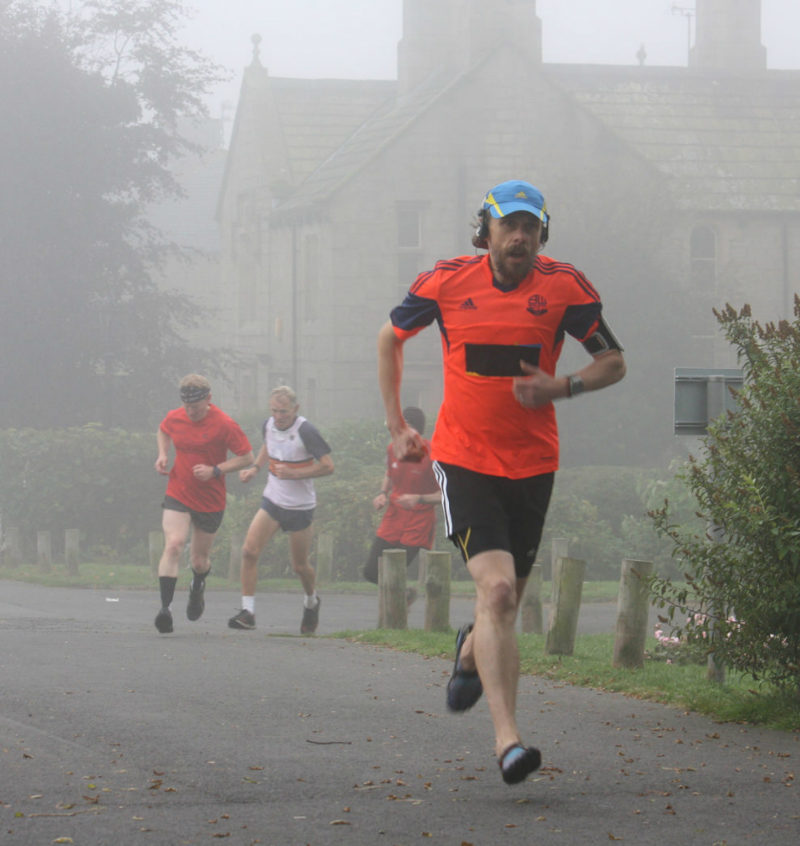
I started running in 2001 and ran on and off for the next five years, usually for a mile or three. Smoking repeatedly got in the way. In my mind, I was either a runner or a smoker; I never saw myself as both.
In 2006, I stopped smoking for good (as of 2026), after roughly a year away from running. Work commitments also played a part in the break. I weighed 14 stone 6, felt unhealthy and remembered how good those earlier runs had made me feel. I wanted to lose weight, but first I had to get past a dispiriting thought: I used to run, so why am I this unfit?
I followed a Couch to 5K program, or something very similar. Starting with as little as one minute of running and one minute of walking got me past the breathlessness that would otherwise put me off. I could work towards 30 minutes gradually instead of expecting my old fitness to be there on the first outing.
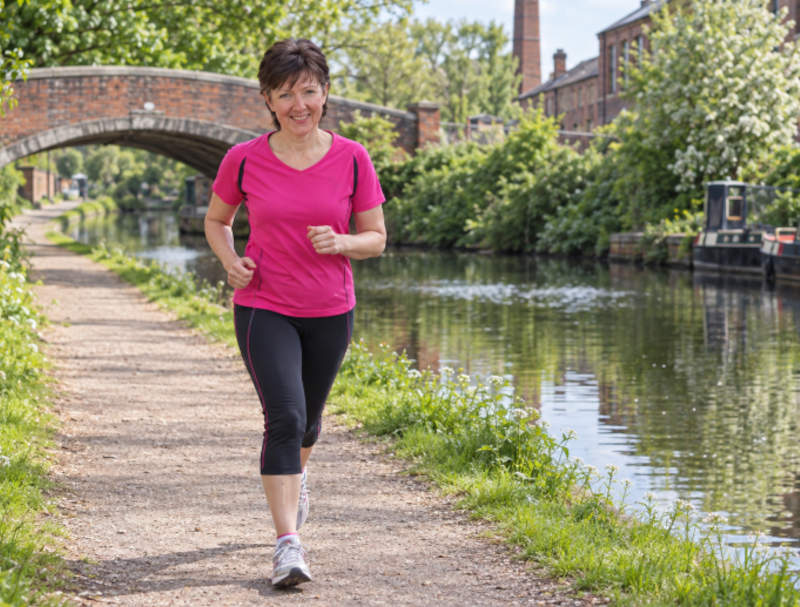
Around 2011, Julie followed the plan too. She found it difficult and needed determination to keep going. Eventually she chose to extend it beyond 5K and ran four miles for the first time. She felt empowered by that achievement. Julie did not fancy a parkrun: she felt self-conscious about running with other people and preferred to set her own target. Her goal was four miles, not an extra requirement of this plan.
Before
your first session
If an ordinary walk is already difficult, begin by building a comfortable walking routine. As a practical starting test for this schedule, see whether you can walk comfortably for about 30 minutes. This is a readiness guide, not a medical test. Speak to your GP before starting if you have health concerns or have been inactive for some time. [1, 4]
Choose a fairly flat, familiar route. A phone timer is enough for the early intervals; you do not need a sports watch. To check how far you have covered, a free phone GPS app can measure your distance. Wear comfortable clothing and shoes that fit well and don't rub.
If you’re buying your first running shoes, I’d consider a flexible minimalist pair, or a cushioned shoe without features designed to control pronation. I prefer minimalist shoes because they allow me feel the ground below my feet. Shoe design can change how people land, although research has not shown that one type prevents injuries for everyone. [2, 6]
I would avoid a running shop that asks you to run briefly on a treadmill and then tells you that you need a shoe to “correct” your pronation. Pronation is normal, and that short assessment doesn't establish that you need correction.
Remember, the run/walk intervals give you a gradual start, so if you’re switching from conventional shoes, introduce minimalist shoes gradually too. [2, 7]
How
to use the schedule
Plan three sessions a week with at least one non-running day between them, such as Monday, Wednesday and Saturday. Begin each session with five minutes of walking and finish with another five minutes. These walks are additional to the intervals listed. [1]
Run slowly enough to speak a short sentence without struggling. Slow running is fine; the intervals are not sprints. Take each planned walking break even if you feel you could keep running. That helps you save energy for the next interval and build up gradually.
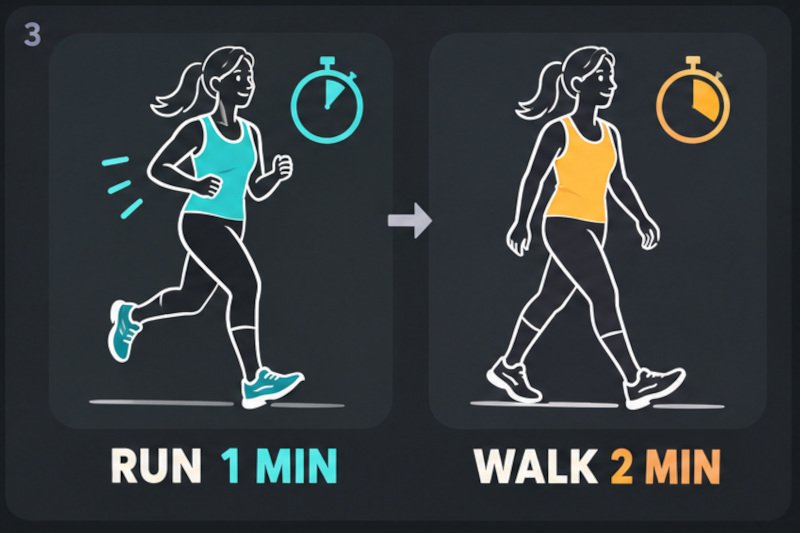
“Run 1 / walk 2 × 8” means one minute running followed by two minutes walking, repeated eight times, including the last walking interval. All figures are in minutes. Main-session totals include those walking breaks; add ten minutes for your opening and finishing walks.
This schedule builds running time through Stage 8, then lets you work towards covering the full 5K. It is a flexible plan: repeat a stage or shorten an interval to suit your current fitness. No schedule can guarantee that everyone will reach 5K on the same timetable.
Your couch to 5K
Stages 1 to 4: aim for three sessions per stage, with at least one non-running day between them. One stage usually takes a week; take longer if you need to. Session 2 is shorter than the other two. Repeat a stage before progressing if the next one feels too difficult.
| Stage | Session 1 | Session 2 | Session 3 |
|---|---|---|---|
| 1 | Run 1 / walk 2 × 824 min | Run 1 / walk 2 × 618 min | Run 1 / walk 2 × 1030 min |
| 2 | Run 2 / walk 2 × 728 min | Run 2 / walk 2 × 624 min | Run 2 / walk 2 × 832 min |
| 3 | Run 3 / walk 2 × 630 min | Run 3 / walk 2 × 525 min | Run 3 / walk 2 × 735 min |
| 4 | Run 5 / walk 3 × 432 min | Run 5 / walk 2 × 321 min | Run 5 / walk 3 × 540 min |
Make
the first stage fit you
My own early intervals were sometimes one minute running and one minute walking. This schedule allows two minutes of walking. Use the extra recovery time. If a minute of running is too much, try a shorter interval or more walking before attempting the listed session.
If the full session seems too much, you can stop after fewer run/walk intervals. Note how many you completed and try the same amount next time. You can build up from there; there’s no need to add the intervals you missed to your next run.
Building
longer running intervals
Stages 5 to 8 build longer running intervals. The final stage builds towards the full 5K distance. Longer bouts may feel harder even when the overall session time changes little, so repeat any stage that you need.
| Stage | Session 1 | Session 2 | Session 3 |
|---|---|---|---|
| 5 | Run 8 / walk 3 × 333 min | Run 7 / walk 2 × 327 min | Run 8 / walk 3 × 333 min |
| 6 | Run 9 / walk 3 × 336 min | Run 8 / walk 2 × 330 min | Run 10 / walk 3 × 339 min |
| 7 | Run 15 / walk 5 × 240 min | Run 15 / walk 5 / run 1030 min | Run 20 / walk 5 / run 1540 min |
| 8 | Run 20 / walk 5 / run 1540 min | Run 10 / walk 3 / run 2033 min | Repeat a comfortable longer session. Note your distance. |
| 9 onwardRepeat as needed | Repeat a manageable session. | Run or run/walk comfortably for around 30 minutes. | Gradually extend your longest outing until you cover 5K. Take walking breaks if you choose. |
Couch to 5K - Parkrun
I think parkruns are a great first goal. Five kilometres gives you something tangible to work towards, and you can walk parts of the course. Because parkruns happen every week, repeating a stage does not mean missing your chance: another Saturday will come round when you are ready. You can also cover your first 5K on your own route if you prefer. [8]
Thirty
minutes and 5K are different goals
Five kilometres is about 3.1 miles. At eight minutes per kilometre it takes 40 minutes; at nine minutes per kilometre it takes 45. So a runner who reaches 30 minutes has made real progress even if 5K is still some way off.
Use Stage 8 to see how far you cover during a comfortable longer session. If that falls short of 5K, keep the first two sessions in Stage 9 manageable and extend the third outing a little at a time. You might add around five minutes when the previous distance feels comfortable, repeating the stage as often as needed. For your first couch to 5K, you can take walking breaks or aim to run the whole distance without stopping if that is your goal. Many runners remember their first nonstop 5K with real satisfaction. Take your time getting there, and avoid making the same outing faster as well as longer. Speed isn’t important at this stage in your running journey.
When
a week feels too hard
A plan cannot see your sleep, your work week, or how your legs feel. Before moving on, ask: did I finish without forcing the pace, did I recover before the next session, and can I manage normal daily activity comfortably? If the answer is no, repeat or reduce the stage.
If you miss a session, do it on your next running day and keep a rest day between runs. You do not need to fit two runs together to catch up. After illness or a longer break, return to a stage that feels manageable now, even if you completed a later one before. Your target date can move.
Julie found the plan hard, and willpower mattered. But determination can mean turning up for a repeat stage as much as completing a longer run. Her four-mile run was her chosen milestone. If a parkrun appeals to you, I would recommend giving one a try: reaching 5K and taking part in your first running event can be two satisfying achievements in one morning. You may find running with others less daunting than you expect. Julie ran her first four miles with me alongside her. It was an occasion she felt proud of, and she carried on running on our treadmill, where she felt most comfortable.
Effort
is expected, but pain needs attention
Breathing harder during exercise is different from severe or unusual breathlessness. Stop for sharp or worsening pain, pain that changes your stride, dizziness or feeling faint. Persistent or recurring symptoms deserve assessment, not repeated attempts to run through them.
Seek urgent help for concerning breathlessness. Call 999 for severe difficulty breathing, a tight or heavy chest, or chest pain spreading to the arms, back, neck or jaw. [3]
Support
the running without overloading your week
The three runs are enough new structure to begin with. You can fit walking and easy cycling around them if they leave you refreshed, but extra exercise is optional. A demanding job counts as physical work too. You do not need to fill every non-running day; rest if you prefer.
Strength work belongs in a longer-term routine, but introduce it at a manageable level. General activity guidance recommends muscle-strengthening activity on at least two days a week; that is a wider goal to build towards, not a demand to add two hard workouts immediately. [4]
Couch to 5K - running diet
I returned to running to lose weight and feel healthier. Eating better was part of that change too. Those were my reasons for starting; you can follow Couch to 5K without trying to lose weight, and the plan doesn't guarantee you will.
Start with regular, varied meals: potatoes, oats or wholegrain bread; beans, eggs, tofu, fish, chicken or meat such as beef or pork; fruit and vegetables; and some unsaturated fats. I have familial hypercholesterolaemia (FH), so I pay attention to the amount of saturated fat I eat and balance fish, chicken and some red meat.
That is my approach, not a diet requirement for this plan. [5]
Fit your runs around your usual meals. Afterwards, a balanced meal or snack can help you refuel and recover. Drink regularly, particularly in warm weather, and keep changes simple enough to maintain alongside your running.
Taking Your First Steps
Choose your first three running days, find an easy route and start at a level you can manage. Take it slowly, eat enough to support your effort and recovery, and repeat a week whenever you need more time to adapt.
In 2006, one minute of running at a time got me back into running. That manageable starting point helped me keep going long enough to discover what I could do. Your Couch to 5 K starts with the same opportunity: a small, achievable step you can build on.
Where
to go next

Your first 5K gives you a solid base to build on. You might enjoy repeating the distance until it feels more comfortable, making parkrun a regular part of your week or month, or exploring a few new routes.
If you used walking breaks, your next goal could be running the full 5K without stopping.
For help building a routine that fits your life, visit Running for Beginners.
When you feel ready to work towards a longer distance, the Beginner 10K Plan offers a next step. Give yourself time to enjoy what you have achieved before taking on more.
Back in 2006, Couch to 5K gave me a manageable way to start again when I felt discouraged by how unfit I had become. Those short running intervals helped me rebuild my fitness and rediscover the enjoyment of running. Wherever this plan takes you, I hope it gives you the confidence it gave me: that you can run, improve and make running part of your life.
Best of luck to you.
If you can already run two miles at a comfortable pace and want to work towards a longer distance, our beginner 10K training plan offers a structured next step. Build gradually, allow time for recovery and adjust your progress to how you feel.
👉 Explore the beginner 10K training plan
Running Injuries Hub
Learn what commonly causes running injuries, when pain is a warning sign, and how to return to running without rushing the process.
👉 Explore the Running Injuries Hub here
References Used:
- NHS — Couch to 5K running plan. Used for comparison with its nine-week endpoint and for rest spacing, walking warm-up and cool-down, and health preparation.
- Relph N and colleagues (2022). Running shoes for preventing lower limb running injuries in adults. Cochrane Database of Systematic Reviews, CD013368. Evidence does not support a universal injury-prevention promise for minimalist or cushioned shoes; certainty varies by comparison.
- NHS — Shortness of breath. Used for urgent warning signs and emergency advice.
- NHS — Physical activity guidelines for adults aged 19 to 64. General preparation and strength guidance, not a requirement to reach all targets immediately.
- NHS — The Eatwell Guide. General dietary guidance, not a personalised sports nutrition prescription.
- Hollander K and colleagues (2015). Comparison of minimalist footwear strategies for simulating barefoot running. PLOS ONE, 10(5): e0125880. A short treadmill study in 35 experienced runners found different landing patterns across shoe conditions. It did not measure injury prevention or beginners following this plan.
- Ridge ST and colleagues (2013). Foot bone marrow edema after a 10-week transition to minimalist running shoes. Medicine and Science in Sports and Exercise. This study concerns runners switching shoes; it does not set a precise safe starting dose for new runners.
- parkrun UK — parkwalk information. parkrun welcomes people who walk the 5K route, with no time limit. Check local event details before attending.
Recent Articles


-
Affirmations for Running Motivation: Words to Practise
Oct 18, 26 05:18 PM
 Explore affirmations for running motivation through Andrew and Julie’s experience, practical examples and audio, with an honest look at the evidence.
-
Running Motivation and Mental Strength: Find Your Focus
Oct 16, 26 07:28 AM
 Build running motivation and mental strength with practical habits, goals, self-talk and ways to handle setbacks, informed by research and running experience.
-
Running for Beginners: Start Small, Build a Lasting Habit
Oct 06, 26 05:11 PM
 Explore running for beginners with practical run-walk advice, clear guidance and first-hand experience. Start at your own pace and build a lasting habit.
