- Home
- Running Strength and Form
Running Strength and Form: Simple Ways to Move Forward
By Andrew Greenhalgh, October 2026
Build strength and confidence by understanding how running strength and form work together. Strength helps you meet the demands of running; form is how you move through each stride. Understanding both can help you decide where to focus your effort and make sense of the advice you encounter.
Here at MyRT, I combine published research with my own experience to help you decide what could work for you. Perhaps you’re new to strength training, curious about cadence—how many steps you take per minute—or confused about how your feet should land (forefoot, heel, etc.). This guide explains the main ideas, gives practical starting points and links to more detailed guidance on each topic.
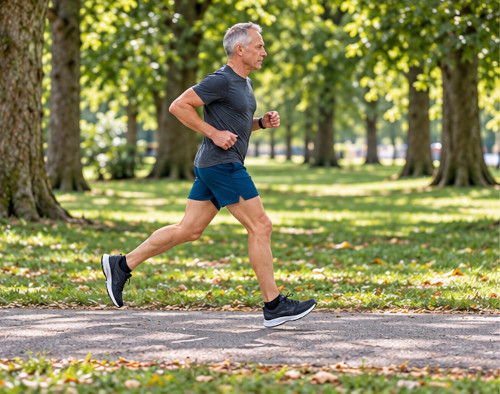
Have a particular question? Jump to any section below. If you have time, read the whole page first: seeing how strength, movement and recovery connect can make the individual choices clearer.
- Running strength and form: what strength work adds
- Beginner strength training: make the first step manageable
- How often should strength training fit into your week?
- Core stability: a supporting role worth understanding
- Running strength and form without overthinking every stride
- Running cadence: finding a rhythm you can use
- Running drills: give each exercise a purpose
- Hill running technique: adapting to the slope
- Stability ball exercises: an option, not a requirement
1.
Running strength and form: what strength work adds
For many years, I fitted strength training around my running, usually managing two half-hour multigym sessions a week alongside core exercises and pull-ups. Running remained my priority, and I rarely felt too sore to run comfortably afterwards.
My experience showed me that strength work could fit around my running. Research suggests it may also help runners use less energy at a given pace—an improvement known as running economy. Studies have found benefits from heavier lifting, jumping exercises known as plyometrics, and programs combining different strength methods. The type and demands of the training matter, so I cannot assume my lighter sessions produced the same results. [2]
Choose a setup that makes strength training easy to fit into your week. A bench and weights or a multi-gym can work well if you have space at home; dumbbells and resistance bands are easier to store; joining a gym offers more equipment and access to a trainer and guidance. Start with what suits your budget and confidence, then adapt as you discover what you enjoy and can sustain.
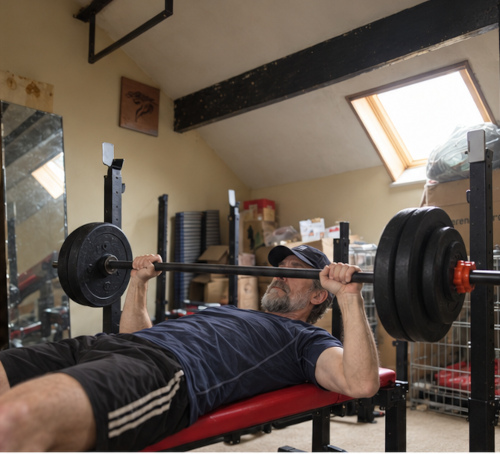
Running strength and form develop with practice—you don’t need a fully equipped home gym to begin.
Explore Strength Training for Runners for the next step.
2.
Beginner strength training: make the first step manageable
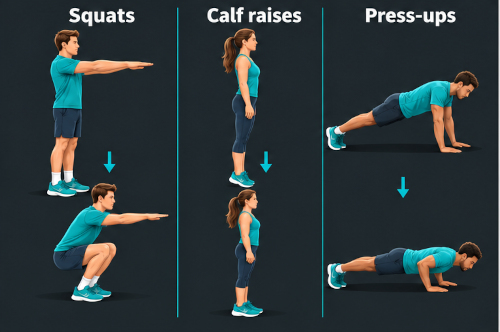
Being new to strength training doesn’t mean starting from scratch physically. If you already run regularly, exercises such as squats, calf raises and press-ups may be a suitable starting point. Choose versions you can perform with control and that feel challenging towards the end of a set. A chair-supported squat or wall press-up offers an easier variation if you need one.
Keep your first sessions brief while you learn the movements and see how they affect your next run. As the exercises become easier, progress to a harder variation or add resistance. Bodyweight training can build strength, but the challenge needs to increase as you get stronger. [1]
To see how strength work fits into your running strength and form routine, note the exercises, sets, repetitions and any weights used, along with how your next run feels. Over time, this record can help you judge when to increase the challenge and when to allow more recovery.
3. How
often should strength training fit into your week?
Before adding sessions, check the week they fit into. A demanding run, a physical job, and an unfamiliar leg workout all take a toll on recovery, even if they fall into different boxes in your diary.
General guidance supports strengthening the major muscle groups at least twice a week. That is a useful direction for healthy adults, not proof that every runner must begin with two full sessions immediately. One manageable session can be a practical first step while you learn the movements and assess the effect on your running. [1]
I sometimes used the multigym on running days and sometimes on separate days. What mattered was whether I could manage both and recover between sessions. Start with a manageable amount of strength work, see how it affects your running, then increase it. Allow recovery time between a new or demanding leg workout and an important long run.
A sustainable approach to running strength and form leaves room for adjustment. If soreness repeatedly changes your stride or spoils your runs, reconsider the amount, difficulty or timing of the strength work.
4. Core
stability: a supporting role worth understanding
Core exercises train the muscles around your abdomen, back and pelvis to support and control movement. That doesn’t mean you need to hold your stomach tight throughout a run. In my experience, consciously trying to control my running movements has caused tension and back discomfort instead of helping me move freely. I find instructions such as “keep your core engaged” can become another distraction from the rhythm of running.
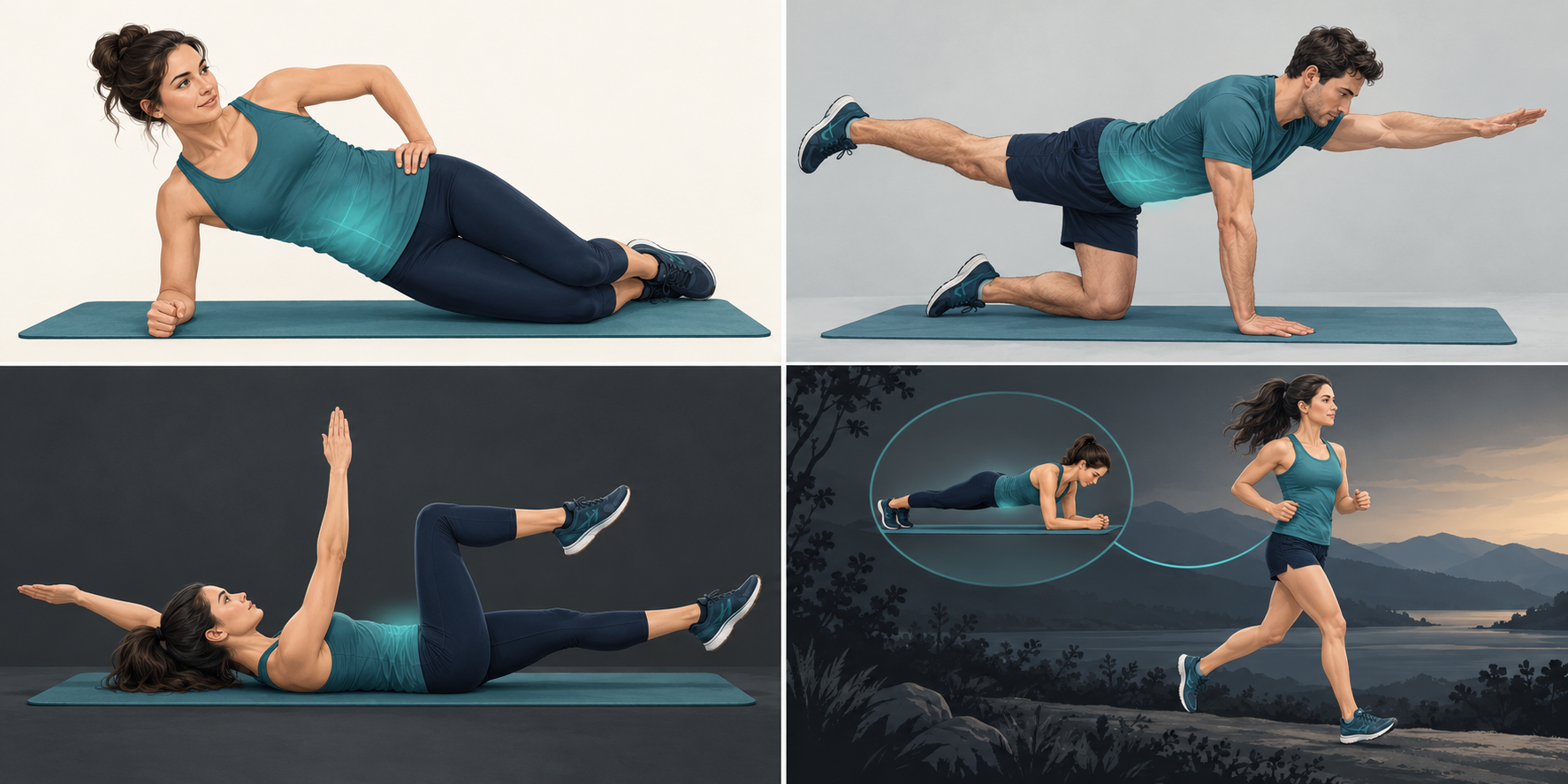
Encouraging evidence supports training these muscles outside your runs. In a 24-week trial of 325 novice runners, those who followed a physiotherapist-guided hip-and-core program had fewer lower-limb injuries than a stretching group following the same running program. The exercises targeted both the hips and core, so the findings don’t tell us whether core exercises alone would offer the same benefit. [3]
Core exercises can contribute to running strength and form, but they are one part of your training alongside running and recovery. Choose exercises you can perform with control, and increase the difficulty as you get stronger. The aim is to build strength you can use naturally while running, without having to think about tightening your stomach at every step.
5.
Running strength and form without overthinking every stride
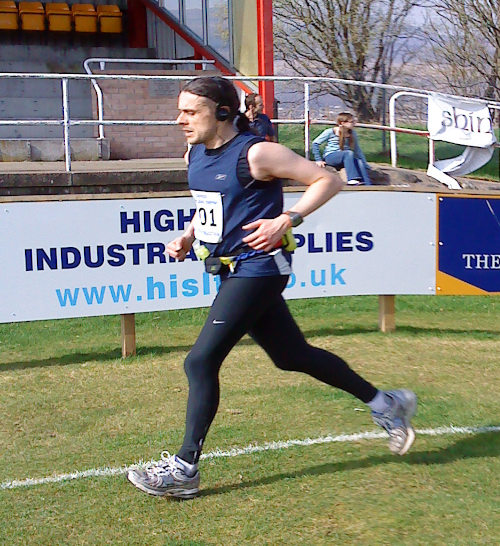
Around 2009, I tried ChiRunning and the Pose Method because I wanted to improve my running. But following the instructions left me thinking about too many things at once. I felt tense and developed back discomfort. Reading Steve Magness later helped me understand why rhythm and how movement feels might be more useful than consciously controlling each part of my stride. He emphasises cues that help the individual runner connect a feeling with a movement. [11] That distinction has made a big difference to me: a simple cue can help me find my rhythm, while a checklist of instructions leaves me tense and distracted.

Research supports avoiding too much conscious control. In a treadmill study, trained runners used less energy when they focused on their surroundings than when they concentrated on their breathing or running movements. [4] Other studies show that planned practice can change aspects of running form, such as cadence, but those changes do not necessarily improve speed or running economy. [5] Changing how you run and improving how you run are two different outcomes.
My most noticeable changes in running form developed after I began using Vibram FiveFingers and Vivobarefoot shoes around 2011, alongside barefoot runs of two to three miles. My knee problems settled quickly, while my recorded cadence increased over time without me consciously trying to change it. Video footage also showed a difference: I landed on my forefoot when barefoot or wearing minimalist shoes, compared with a heel strike in the cushioned stability shoes I had previously worn to control pronation.
Those changes prompted me to study how footwear can influence running form. Research suggests that barefoot and minimalist running can shift some of the work from the knee towards the ankle, placing greater demands on the calf muscles and Achilles tendon. Running redistributes the demands rather than removing them. [6] My experience gave me a reason to investigate and experiment. However, it doesn’t establish that the shoes alone resolved my knee problems or that every runner would benefit from the same change.
A running cue gives you one simple focus, such as matching your steps to a rhythm. That differs from trying to control your knee angle, foot placement and arm position during every stride. Both require attention, but a cue can guide the overall movement without making you manage each part. Ask what the advice is meant to achieve and whether it helps you move more comfortably or leaves you tense and distracted.
Read Running Form Tips for more of my experience and approach.
6.
Running cadence: finding a rhythm you can use
The one ChiRunning suggestion that really did well for me was surprisingly simple: a portable metronome. I began at 80 beats a minute, letting my left foot find the beep—equivalent to 160 steps a minute across both feet. Once that felt familiar, I increased it to 90 beats about a month later, giving 180 steps a minute. Each time, I let my footfall settle into the rhythm rather than consciously directing each movement.
Cadence means total steps per minute, but my setting is not a target everyone needs to copy. A review of 37 studies found that increasing step rate can shorten steps and change several measures of joint loading. Evidence about injury and performance outcomes was much thinner, and most studies examined immediate effects. [7]
I felt that the quicker rhythm might have reduced impact, but I did not measure the forces. That distinction helps keep running strength and form grounded: a noticeable change in sensation is useful feedback, while claims about what happened inside the body need stronger evidence.
If you want to explore cadence, try checking your usual step rate on several runs at a similar pace. Then consider what you hope to gain from changing it. My 180 steps a minute describes what I practised, not a target every runner needs to reach.
7.
Running drills: give each exercise a purpose
I spent time doing drills associated with the methods I followed, but I couldn’t identify any improvement in my running. There were too many instructions, and practising the movements did not seem to carry over into a more comfortable stride.
That doesn’t make every drill pointless, but it is worth asking what it is meant to achieve. Does it help you warm up, develop coordination, build strength or practise a particular movement? Getting better at the drill doesn't necessarily mean it helps you run more comfortably, efficiently, or faster.

In a study of 30 recreational runners, adding a drill program to 15 weeks of interval training did not improve running speed or reduce landing forces. This finding concerns the combined program tested; it cannot tell us whether an individual drill might help a particular runner. [8] Separately, research suggests that structured plyometric training—jumping and hopping exercises—can improve running economy, helping runners use less energy at a given pace. That supports a specific use of these exercises, rather than a general claim that drills improve running form. [2]
When choosing exercises for running strength and form, ask what each one is meant to help you develop and how you will judge whether it is useful. A drill might prepare you for a session or build a particular ability, but getting better at it doesn't necessarily improve your running.
8.
Hill running technique: adapting to the slope
Around Lee Quarry, I have run plenty of climbs and descents without treating them as form lessons. Uphill, I shortened my stride. Downhill, it sometimes felt as though I let myself “fall”, catching each step as I went. That describes the sensation, rather than an instruction to surrender control on a steep descent.
Slopes change the task. Research describes different movement and muscular demands uphill and downhill, so it makes little sense to expect your flat-road stride to remain identical everywhere. Descending also involves absorbing and controlling energy, even when the effort feels easier aerobically. [9]
In practice, let your pace respond to the gradient, and keep your speed within what you can control on the surface ahead. Walking a steep climb is an option, not a failed attempt at running. On unfamiliar descents, leave yourself time to choose your footing.
Hills give running strength and form a practical context: adjusting to what is under your feet, rather than maintaining one fixed picture of how running should look.
9.
Stability ball exercises: an option, not a requirement
Julie found that keeping her balance on the stability ball made her core work hard, with crunches feeling more demanding because she also had to steady herself. She even tried using it at her desk, although Molly (below) had other plans for what was clearly something worth pursuing.

Our stability-ball page includes trunk and leg exercises, with options to match different levels of strength and confidence.
A ball changes an exercise's balance demands and can add variety. Research on training with unstable equipment reports some benefits in athletic populations, but the methods and participants vary greatly. It does not show that a stability ball is essential for distance runners or that it prevents running injuries. [10]
A stability ball can add variety and a playful challenge to your strength routine. Start with movements you feel comfortable doing, then explore more demanding exercises as your control improves. Julie enjoyed the extra challenge of keeping her balance—and finding exercises you enjoy can make it easier to keep coming back.
Explore our Stability Ball Exercises page for the existing exercise collection.
Choose
one useful next step
You do not have to change everything you have just read about. Choose the section above that matters most to your running now: starting strength work, finding room for it, or making sense of a running cue to improve technique. Follow the link to explore that topic and decide what you’d like to try first.
Understanding running strength and form can help you make confident choices about your training: which exercises deserve your time, which cues feel useful and where you might benefit from more guidance. You can explore these ideas gradually, allowing time to discover what works alongside your running and everyday commitments.

Our Strength Training for Runners guide will help you choose an approach that suits your space, budget and experience. If weight loss is one of your goals, Strength Training for Weight Loss Runners explores how strength work can support that aim.
Take your time, try what interests you and enjoy noticing your progress. I hope this guide helps you feel more confident about your training and enjoy your running even more.
Bye for now,
Andrew.
Research
references
1. ACSM (2026). Resistance Training Prescription for Muscle Function, Hypertrophy, and Physical Performance in Healthy Adults. General resistance-training evidence; not a runner-specific program. Read source
2. Llanos-Lagos et al. (2024). Effect of Strength Training Programs in Middle- and Long-Distance Runners’ Economy at Different Running Speeds. Systematic review and meta-analysis. Read source
3. Leppänen et al. (2024). Hip and core exercise programme prevents running-related overuse injuries in adult novice recreational runners. Randomised trial; 325 participants, 24 weeks. Read source
4. Schücker et al. (2009). The effect of attentional focus on running economy. Short treadmill experiment in trained runners. Read source
5. Doyle et al. (2022). The Effectiveness of Gait Retraining on Running Kinematics, Kinetics, Performance, Pain, and Injury in Distance Runners. Systematic review and meta-analysis. Read source
6. Biomechanics and Injury Prevention for Barefoot/Minimalist Running (2023). Review of biomechanics and injury considerations. Read source
7. Anderson et al. (2022). What is the Effect of Changing Running Step Rate on Injury, Performance and Biomechanics? Systematic review and meta-analysis. Read source
8. Usage of Running Drills in an Interval Training Program: Implications Related to Biomechanical Parameters of Running (2015). Findings apply to the studied intervention. Read source
9. Vernillo et al. (2017). Biomechanics and Physiology of Uphill and Downhill Running. Review. Read source
10. Instability core training vs traditional core training on trunk strength and sprint performance among athletes (2025). Systematic review and meta-analysis; substantial heterogeneity limits interpretation and transfer to distance running. Read source
11. Magness, S. (2017). Form: How It Feels Is More Important than How It Looks—Science of Running. Coaching commentary drawing on personal experience and motor-learning research; supports the discussion of rhythm, sensation and individual cues. It is not a peer-reviewed running study. Read
Running Injuries Hub
Learn what commonly causes running injuries, when pain is a warning sign, and how to return to running without rushing the process.
👉 Explore the Running Injuries Hub here
To return from Running Strength and Form back to the Home Page click here >>
Recent Articles


-
Running Strength and Form: What Really Helps Your Running?
Oct 31, 26 05:04 PM
 Take the confusion out of running strength and form with research-led advice on strength work, cadence and technique. Find what deserves your time.
-
Running Tips for Every Stage of Your Running
Oct 29, 26 02:12 PM
 Find running tips to help you train your body and mind together, with practical guidance on building fitness, staying motivated and handling setbacks.
-
Affirmations for Running Motivation: Words to Practise
Oct 18, 26 05:18 PM
 Explore affirmations for running motivation through Andrew and Julie’s experience, practical examples and audio, with an honest look at the evidence.
